Is It Cheaper to Renovate or Knock Down and Rebuild? A Melbourne Builder’s Honest Answer
Wondering whether to renovate or knock down and rebuild in Melbourne? Discover the key cost factors, benefits, and considerations to help you decide which option best suits your property, lifestyle, and budget with insights from Ansel Homes.
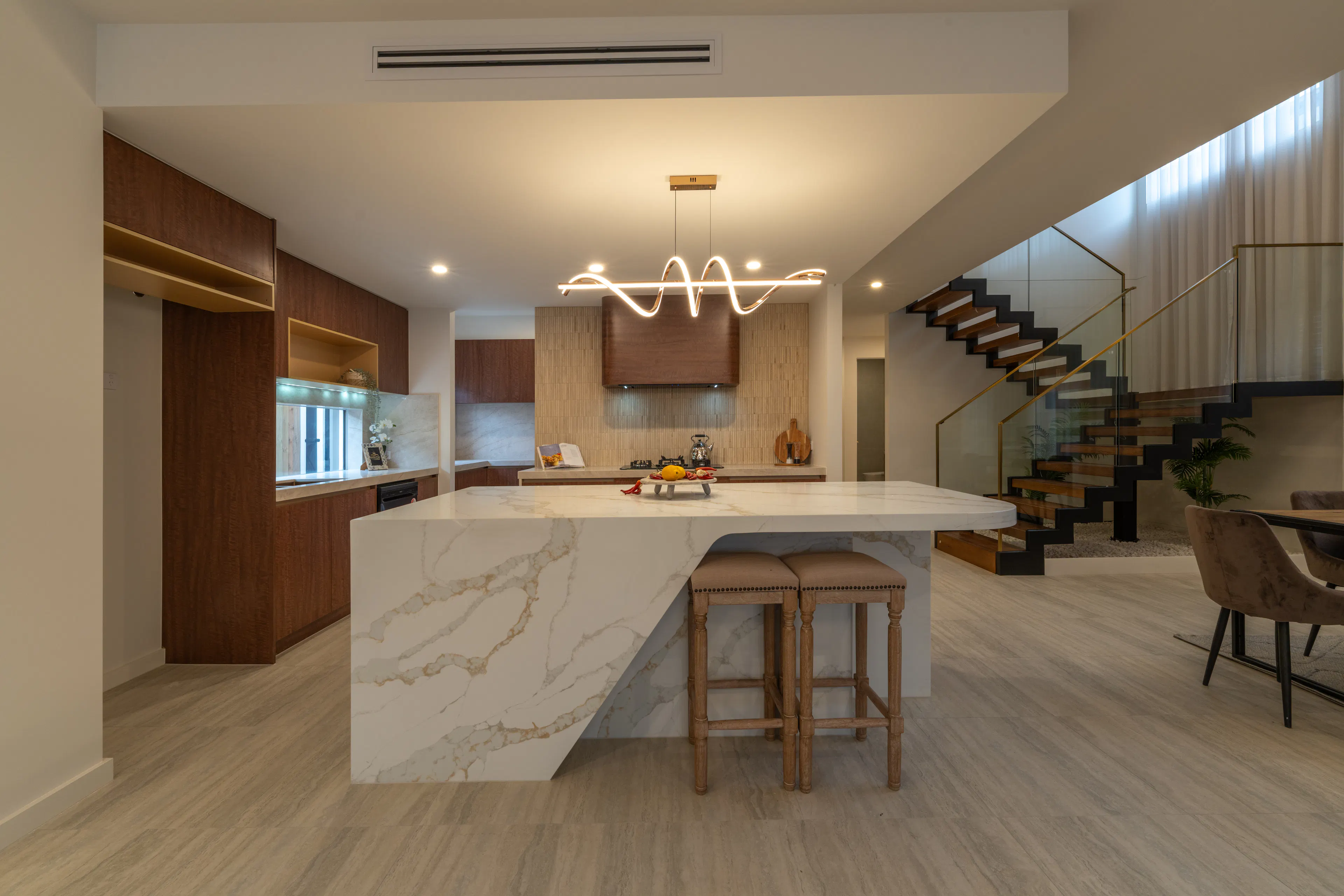
If you have ever stood in your kitchen at 7am, bumping into the same awkward corner you have bumped into for ten years, you have probably wondered whether it is time to fix this house or start again. It is the question we hear most often from Melbourne homeowners, usually somewhere between the first cup of coffee and the first quote.
We are a Melbourne home builder, and we sit down with people who are weighing up exactly this decision every week. Some leave happily planning a renovation. Others walk out realizing a rebuild makes more sense. This guide shares what we see on real sites, the numbers we work with in 2026, and the questions worth asking before you commit to either path.
The short answer: renovating is usually cheaper upfront, but not always cheaper overall
On paper, renovation wins the first round. In 2026, a major whole-home renovation in Melbourne typically sits around $220,000 to $450,000, or $280,000 to $600,000 if you add a rear extension. A knockdown rebuild generally lands between $450,000 and $900,000 all in, covering demolition, site works, approvals and construction.
But the cheapest quote and the cheapest outcome are rarely the same thing. Older homes hide problems behind walls, and once a renovation starts uncovering them, the budget can move fast. That is why the real answer depends on your house, not on a rule of thumb.
What does a knockdown rebuild actually cost?
A knockdown rebuild means demolishing your existing home and building a new one on the same block. Here are how the costs typically break down for an illustrative 200 square meter home, based on current Melbourne figures:
• Demolition and site clearance: $15,000 to $40,000
• Asbestos removal (if present): $2,500 to $20,000 or more
• Soil test, site works and services: $8,000 to $25,000
• Design, drafting and engineering: $10,000 to $30,000
• Permits and council fees: $3,000 to $10,000
• New home construction: $420,000 to $780,000 for standard to mid-range homes
• Landscaping, driveway and fencing: $10,000 to $50,000 or more
• Temporary accommodation (9 to 15 months): $23,000 to $36,000
Everything outside the build itself, such as demolition, site works, design, approvals and rent, can add roughly $60,000 to $160,000 to your budget. That is the part many first-time rebuilders underestimate, so we always ask people to plan for it from day one. You can see the full breakdown in our 2026 knockdown rebuild costs and process guide.
One piece of good news: because you already own the land, you generally do not pay stamp duty on a knockdown rebuild. And if the timing is right, our knockdown and rebuild service currently includes a limited-time free demolition offer, which takes one of the biggest upfront costs off the table. Check the page for current terms.
What does renovating really cost?
A renovation looks simpler because you are keeping the walls you already have. In practice, it is the less predictable of the two. Here is what we tend to run into on older Melbourne homes:
• Asbestos. If your home was built before 1990, assume it is there until a licensed assessment says otherwise. It often hides in eaves, wet-area linings and cladding.
• Old wiring and plumbing. Opening a wall for one job often reveals that the services behind it need replacing too.
• Structural surprises. Rotted stumps, cracked footings and sagging roof framing rarely show up on a first walkthrough.
• Energy performance. Lifting an old home to modern comfort levels is difficult and expensive, whereas new Victorian homes must meet a 7-star NatHERS rating and a whole-of-home energy rating of at least 60.
None of this means renovation is a bad idea. It means the price on the quote is only as reliable as what the builder could see before work began. A rebuild, by contrast, is a fixed-price contract on a cleared site, which gives you far more cost certainty.
When renovating is the smarter move
We are always upfront with people when we think renovating is the better call. It usually is when:
• The structure is sound and the layout mostly works for your family.
• Your home has genuine character worth keeping, such as a Victorian or Edwardian with original features.
• A Heritage Overlay applies, which requires a planning permit to demolish and can make a rebuild slow or impossible.
• Your budget is under roughly $450,000 and the changes you want are cosmetic or modest in scale.
When a knockdown rebuild is the smarter move
The tipping point is usually when the renovation stops being a renovation. A common rule of thumb in the industry is that once the cost of fixing and reworking an older home creeps towards the cost of building new, a rebuild deserves a serious look. We would suggest considering it when:
• The layout fights you at every turn and fixing it means moving walls, plumbing and structure.
• Asbestos, structural defects or major repairs would use up most of your renovation budget.
• You love your street, school zone and neighbors but not the house.
• You want a home that is cheaper to heat and cool, built to current energy standards.
• You want certainty. A fixed-price contract on a clean site removes most of the guesswork.
Our guide to knockdown rebuild in Melbourne walks through this decision in more detail.
Time matters too
Money is only one side of the equation. A renovation usually takes 6 to 12 months, though it often stretches when hidden issues appear. A knockdown rebuild takes longer overall, typically 12 to 24 months from first conversation to handover, because design and council approvals come first. Construction itself usually runs 6 to 12 months. If you cannot live elsewhere for most of a year, that alone may steer you towards renovating.
Your protections matter more than ever in 2026
Whichever path you choose, check your builder is registered with the Building and Plumbing Commission. Eligible contracts signed on or after 1 July 2026 are covered by Victoria’s Home Warranty scheme, which can provide up to $400,000 of assistance if work is incomplete, defective or non-compliant. Ask your builder to explain exactly what is covered before you sign anything.
So, which should you choose?
If your home is structurally sound, you love its layout and the changes are modest, renovate. If the house is fighting you, hidden costs keep growing or you want a modern, energy-efficient home on a block you already love, a knockdown rebuild can deliver better long-term value, even though the upfront number is bigger.
The honest first step for either path is the same: get a proper site assessment. Check your overlays, get an asbestos inspection if your home was built before 1990, and speak to a builder and broker about a realistic budget and timeline. If you would like a straight answer on your specific block, the team at Ansel Homes is happy to give you one, whether that turns out to be a rebuild or not.
You can also browse our home designs, walk through a finished home at one of our display homes, or learn more about us.
Ready to talk it through? Contact the Ansel Homes team or call 1300 026 735 for a knockdown and rebuild consultation. Visit our knockdown and rebuild page to check the current free demolition offer.
Frequently asked questions
What does “knockdown rebuild” mean?
A knockdown rebuild (often shortened to KDR) means demolishing your existing house and building a brand new home on the same land. You keep your location, your community and your block, but start fresh with a design that suits how you live today. It is usually managed as one coordinated project by a single builder, from site assessment and council approvals through to construction. You can read more about how we run the process on our knockdown and rebuild page.
How long does a knockdown rebuild take?
Most Melbourne projects take 12 to 24 months from your first serious conversation to receiving the keys. Design and documentation usually take 2 to 4 months, council approvals 3 to 4 months, asbestos assessment and demolition 3 to 8 weeks, and construction 6 to 12 months. Some stages overlap, and Melbourne’s wet winters can add a few weeks. Approvals are the stage people underestimate most, so starting the paperwork early is the single best way to keep things moving.
What is knock down in construction?
In construction, a knock down simply means demolishing an existing building so the site is cleared for new work. It involves more than a bulldozer. Services such as gas, water and electricity are disconnected first, an asbestos inspection is completed, and the right permits are secured. In Victoria, demolition needs a building permit, and in most cases council consent under section 29A of the Building Act 1993. Only then does the demolition and site clearing begin.
How to finance a knockdown rebuild?
Most homeowners use a construction loan. Unlike a standard home loan, it releases money in stages, usually at slab, frame, lock-up, fixing and completion, and you only pay interest on what has been drawn. If you already have a mortgage, many lenders will let you refinance it into the construction facility, and the equity in your land often acts as your deposit.
The part to plan carefully is overlap. For a while you may be covering mortgage repayments, rent on temporary accommodation and builder progress payments all at once. Speak to a broker early, and take a look at our home financing page to get started. We are builders, not financial advisers, so please confirm lending and stamp duty questions with a licensed broker and the State Revenue Office.
How is demolition cost calculated?
Demolition for a typical Melbourne home runs from about $15,000 to $40,000, and the final figure comes down to a handful of things:
• Size and storeys. A larger or double-storey home takes more time and generates more waste.
• Building materials. Brick, weatherboard and concrete are demolished and disposed of differently.
• Site access. Tight driveways or narrow streets make it harder to get machinery and trucks in and out.
• Asbestos. This is the biggest wildcard. Licensed removal is an additional cost and varies widely with the amount and type of material.
• Service disconnections and site clearing. Utilities must be safely disconnected, and sheds, driveways, trees and other structures may need to be cleared as well.
The most reliable way to avoid a nasty surprise is to arrange an asbestos survey before you finalize your budget. It is one of the cheapest ways to protect yourself from a blown estimate.
What is the most expensive part of renovating a house?
It depends on what you measure. Per square meter, kitchens and bathrooms are usually the priciest rooms, because they pack plumbing, waterproofing, cabinetry, appliances and tiling into a small footprint. In total dollars, structural changes and extensions tend to be the biggest line items, since they involve engineering, footings, framing and council approvals.
In our experience, though, the most expensive part is often the one nobody budgeted for: whatever is hiding inside the walls. Asbestos, outdated wiring and plumbing, and structural repairs are what turn a manageable renovation into an overrun. A contingency buffer is not optional on an older home.
What is the difference between demolition and renovation?
Demolition removes a building, either entirely or in large part, so the site can be built on again. Renovation keeps the existing structure and improves, repairs or reconfigures it. The line can blur in Victoria, though. Under section 29A of the Building Act 1993, council consent is generally required when work removes more than half of a building’s volume (counted over three years) or any part of a street-facing facade. So a very large renovation can trigger demolition rules, which is worth knowing before you lock in plans.